“If we are going to live so intimately with these chemicals – eating and drinking them, taking them into the very marrow of our bones – we had better know something about their nature and their power.”
-Rachel Carson
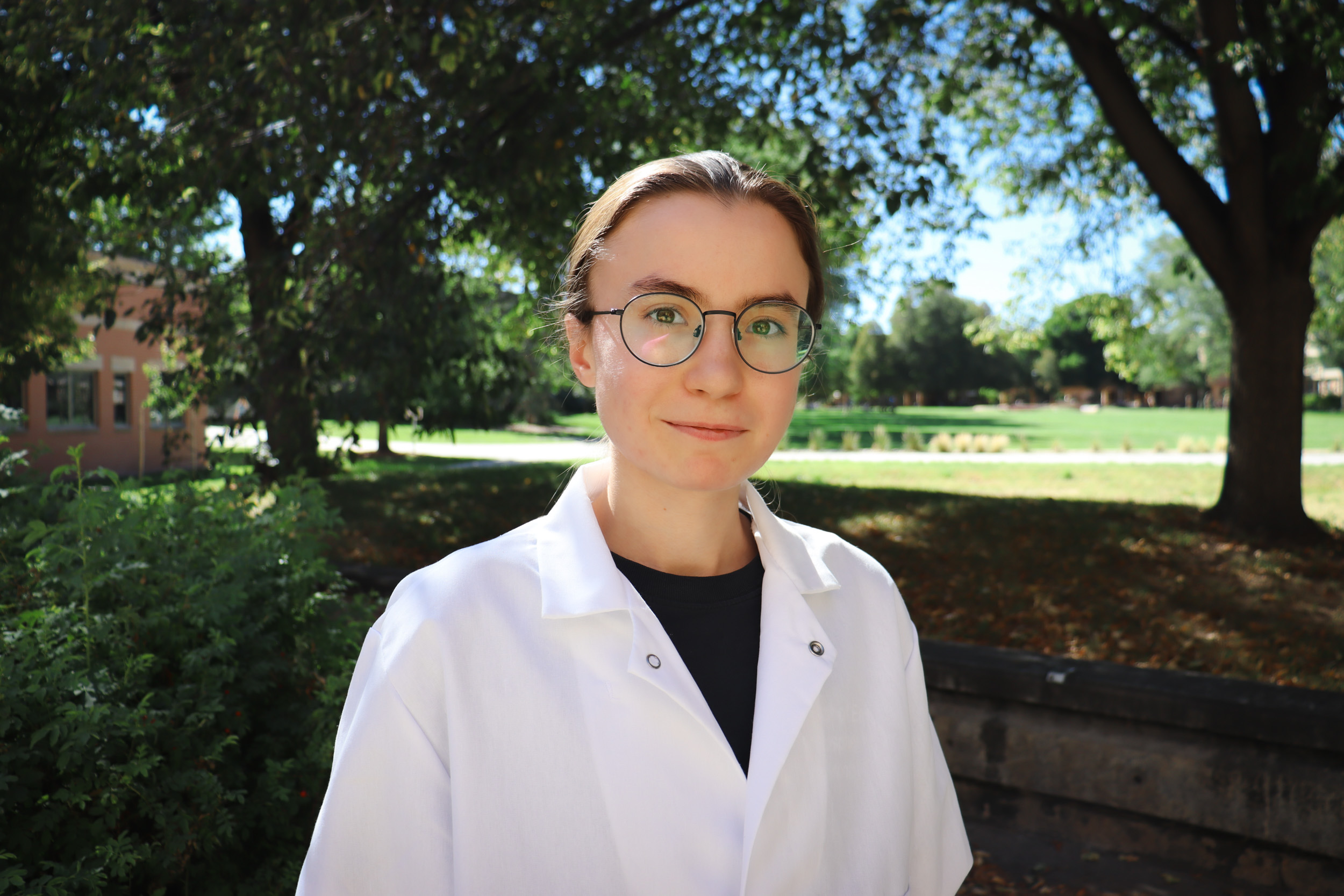
Hey! I'm Jenna. I am actively searching for a PhD program in which I can synthesize minerals and thoroughly monitor their growth, examine their composition, crystallography, surface chemistry, and topochemistry, and probe their interactions with organic molecules and soil constituents at their surficial interfaces. I am intrigued by how mineral surfaces may act as surrogate enzymes and/or enantioselective sorbents for early and contemporary organic molecules, particularly soil organic matter (SOM) and contaminants. I aim to apply synthetic inorganic chemistry, analytical chemistry, computational chemistry, and spectroscopy to address questions in five principle areas of research: 1) illuminating controls on the growth of minerals with specific characteristics; 2) elucidating interactions of mineral surfaces with organic matter and soil constituents; 3) characterizing catalytic potential of mineral surfaces in reactions involving organic molecules; 4) understanding mechanisms of carbon storage in soils; 5) further developing the framework of interactions, fate, and transport of SOM and emerging organic contaminants in soils. I am excited to conduct research in these areas!
I am an aspiring organic geochemist, computational chemist, and synchrotron spectroscopist. My main interests lie in the domain of soils and the types of interactions and reactions that may occur in these subsurface depths. In this way, I wish to use the collective knowledge developed in organic, inorganic, solid-state, and physical chemistry to better understand the Earth’s carbon cycle and interactions of organic molecules – especially contaminants – with soil constituents.
I am enthused to examine the synthesis conditions necessary to achieve a particular composition, morphology, surface chemistry, and topochemistry of a wide array of mineral species – especially those which may be present in soils.
I would like to interrogate the influence these mineralogical factors have on the interactions of atomic and molecular constituents of soils with the surface interfaces of minerals and the potential for minerals to behave as “surrogate enzymes.”
As an alumni of the Climate Solutions Laboratory in the Natural Resources Ecology Laboratory at Colorado State University and an intellectual disciple of Rachel Carson, the main motivations I have for studying the interaction of organic molecules with mineral surfaces are: 1) to better understand the sequestration of carbon by soils; 2) to further characterize the behavior of organic molecules such as pesticides and contaminants in the environment.
I would like to explore the role of mineral surfaces in enantioselective sorption and catalysis, as well as how this may have influenced the development of homochirality in biochemistry. My line of inquiry extends to reactions in soils that produce complex and putatively recalcitrant organic matter. I am intrigued by the organic matter historically referred to as “humic substances.”
I would like to bridge the gap between the experimental and theoretical worlds to inform ideas about interactions between mineral surfaces and soil constituents and mineral-catalyzed reactions.
Using XAS spectroscopy would allow me to corroborate local-order and atomistic-level detail probed by computational chemistry in modeling the potential interactions of molecules at the interface of mineral surfaces. Computational chemistry could also inform the traverse along an energetic landscape of organic molecules as they adopt new conformations at mineral surfaces.
I see computational chemistry and spectroscopy as complementary, wherein the insights gained by invoking quantum mechanics and theoretical physics can be used to bolster the interpretation of spectra and intimately understand the behavior of molecules.
Interested? You can check out my curriculum vitae!